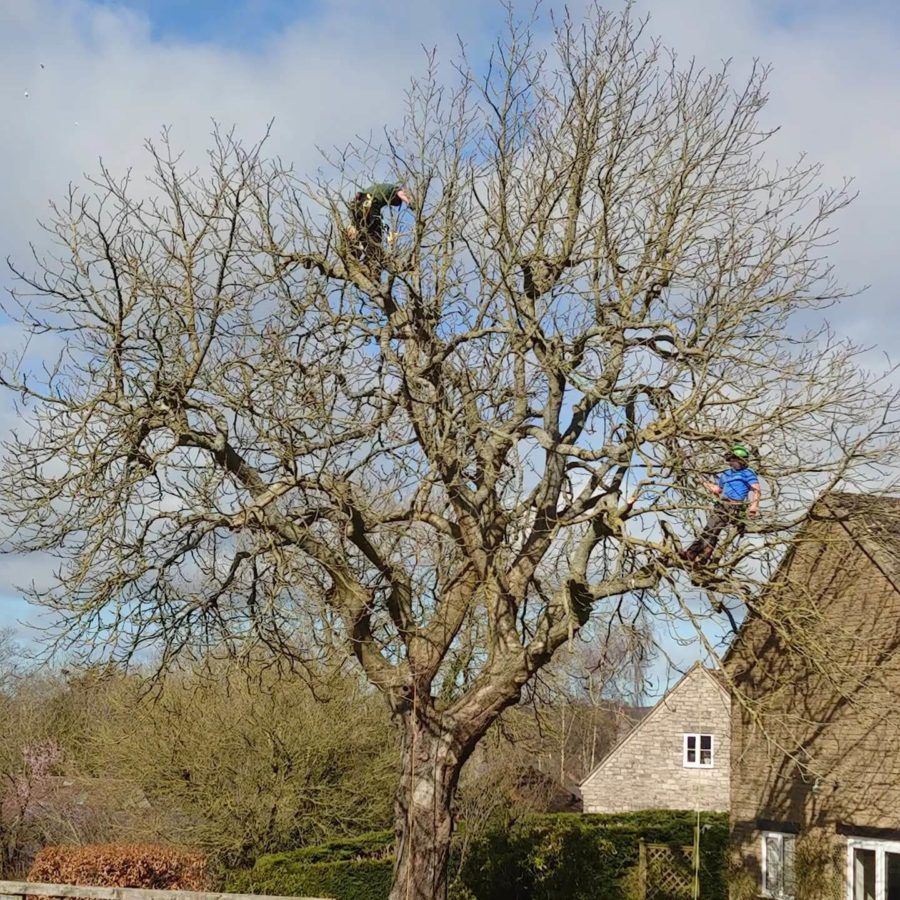
Trees are a valuable feature of any property, providing shade, privacy, and natural beauty. However, when a tree becomes unhealthy or structurally unsafe, it can pose a significant risk to people, buildings, and surrounding landscapes. Knowing when to seek professional help can prevent costly damage and help preserve the health of your trees.
Here are ten signs that a tree on your property may need professional attention.
1. Dead or Falling Branches
Large dead branches are often one of the first signs of a tree in decline. If branches are regularly falling or appear brittle and lifeless, it’s important to have the tree assessed.
2. Visible Cracks in the Trunk
Deep cracks or splits in the trunk can weaken a tree’s structure and increase the likelihood of failure, particularly during strong winds and storms.
3. Leaning Trees
While some trees naturally grow at an angle, a sudden or increasing lean could indicate root damage or instability that requires immediate inspection.
4. Signs of Disease
Discoloured leaves, unusual growths, fungal infections, and early leaf drop can all point to underlying disease issues that may worsen without treatment.
5. Fungal Growth Around the Base
Mushrooms or fungal growth near the trunk can suggest internal decay or root problems. A professional arborist can determine the extent of any damage.
6. Damaged or Exposed Roots
Construction work, soil erosion, or heavy foot traffic can damage roots. Since roots are essential for stability and nutrient uptake, any visible issues should be investigated.
7. Dense or Overgrown Canopy
An excessively thick canopy can restrict airflow and sunlight, making the tree more susceptible to disease and storm damage. Crown thinning may be recommended.
8. Storm Damage
After severe weather, trees may suffer hidden structural damage even if they appear healthy at first glance. A professional inspection can identify potential hazards.
9. Branches Near Buildings or Power Lines
Trees growing too close to structures, roads, or utility lines can pose safety risks and may require careful pruning by trained specialists.
10. Poor Seasonal Growth
Sparse foliage, smaller leaves, or reduced growth compared to previous years can be signs of stress, disease, or declining health.
Don’t Ignore the Warning Signs
Early intervention is often the key to maintaining healthy, safe trees. If you’ve noticed any of these warning signs, professional advice can help you determine the best course of action, whether that’s pruning, treatment, or, in some cases, removal.
At Blackdown Treescapes, we provide expert tree surgery and arboricultural services across the Blackdown Hills, East Devon, Somerset, and Dorset. Contact our team today for a professional assessment and tailored advice for your trees.